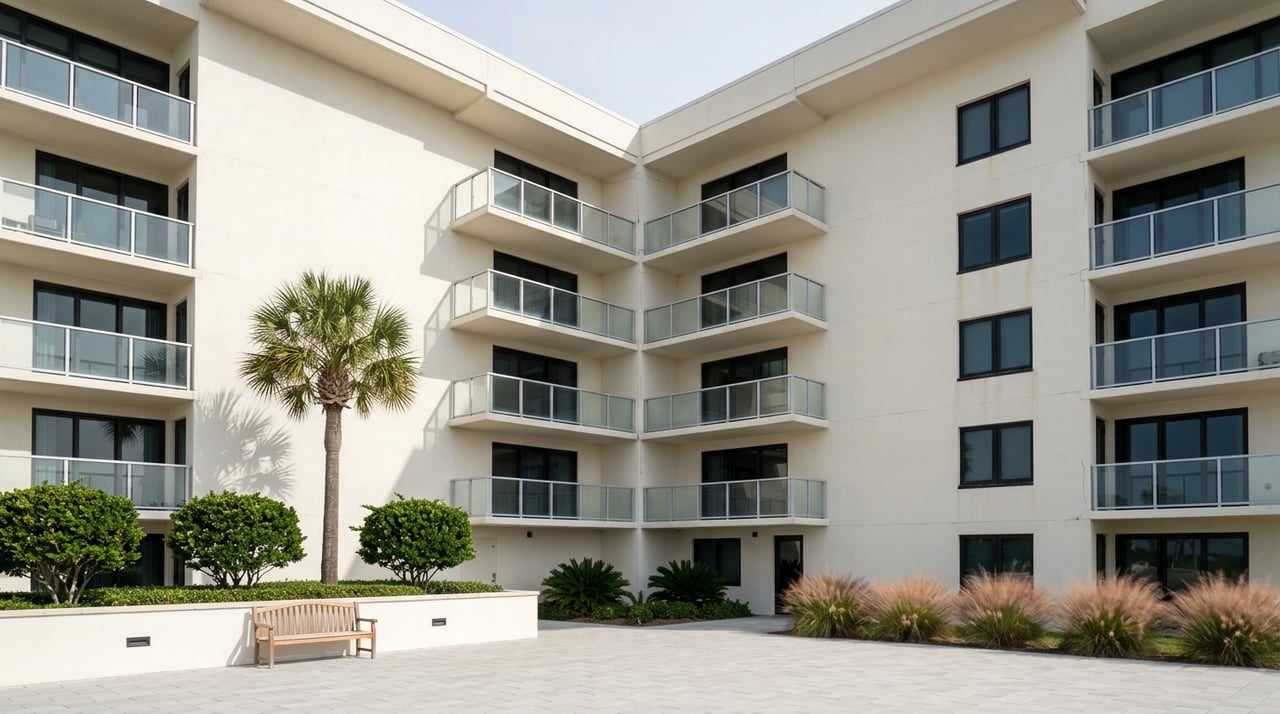
Two units go up for sale on the same beach block this month. Same floor plan, same Gulf view, same asking price within a few thousand dollars. One building finished a major exterior repair project last year and its owners are still paying off the special assessment in installments. The other has a noticeably lower HOA fee and no assessment history on record. Most buyers walk straight past the first listing and toward the second.
That instinct is worth questioning in 2026. Florida has changed condo reserve requirements over the last four years, and those changes are affecting buildings along Front Beach Road. A low fee today does not by itself show whether a building has funded reserves or whether additional costs may arise.
Why 2026 is the year this actually matters
The state's post-Surfside reforms did not land all at once. SB 4-D in 2022 created the first mandate: buildings three stories or taller have to complete milestone structural inspections on a schedule tied to their certificate of occupancy date, and to commission a Structural Integrity Reserve Study, or SIRS, covering the components that keep a building standing. SB 154 in 2023 clarified the mechanics. HB 913, effective July 1, 2025, closed the remaining gap by ending an association's ability to vote its way out of funding those reserves.
The dates that matter for anyone buying or selling a PCB condo this year:
Most existing owner-controlled associations with buildings three habitable stories or higher had to complete their SIRS by December 31, 2025, unless a milestone inspection due by the end of 2026 allowed the two to be combined. For any budget adopted after December 31, 2024, Florida's condo FAQs say the association generally can no longer vote to waive or redirect reserves earmarked for the eight structural categories the SIRS covers: roof, load-bearing structure, fireproofing, plumbing, electrical, waterproofing, windows and doors, and any other item over the state's inflation-adjusted threshold. Full funding under that schedule had to begin by January 1, 2026.
We're seven months into that reality now. Buildings that have funded reserves and completed repairs have addressed those costs. Buildings that have not may still need to make decisions about funding and repairs.
Two kinds of buildings, same beach
Panama City Beach condo buildings currently sort into two rough categories, and the difference shows up in board minutes more than in listing photos.
| Already assessed or funded | Other assessment and funding situations |
|---|---|
| Dunes of Panama, Building A — a seven-story tower that began construction in 1974, approved a $1.6 million special assessment in March 2025, with per-unit costs running as high as the mid-$30,000s for larger units. The bill has been billed and the work is underway. | Pinnacle Port — approved a 2025–2026 budget that paused SIRS reserve contributions. |
| Ramsgate — moved forward in May 2025 with an assessment first proposed that January, funding removal and replacement of Gulfside balconies plus concrete and water-damage repair. Scope is defined, cost is known. | Ocean Villa — expects a painting project in the 2026 post-season likely to trigger a special assessment in the range of $5,000 to $8,000 per unit. The last paint cycle cost the association $700,000, and inflation has pushed the next one higher. Owners know it's coming; the exact number isn't final. |
| Long Beach Resort — four towers spanning 1,300 feet of Gulf frontage completed a full exterior restoration in 2025, addressing stucco damage that had been building since 2019. Recent sales in the building show strong demand for three-bedroom Gulf-front units. | Twin Palms — carrying a $5,815 assessment approved in 2025, paid in three installments. Worth noting for the opposite reason: the final installment was trimmed by roughly $500 when insurance estimates came in lower than projected, which is the kind of responsive billing that suggests the association is tracking costs closely rather than padding them. |
Aqua Condominium sits in its own category worth mentioning. It recorded three sales in 2026 with prices holding steadier than most other Gulf-front buildings in the area, the kind of price stability that tends to follow when a building's financial picture is settled rather than pending.
None of this means an assessed building is automatically the better buy or that every low-fee building is hiding something. It means the fee alone tells you almost nothing. The assessment history, the milestone inspection status, and whether the SIRS has actually been completed tell you far more about what you're buying into than the number on the listing sheet.
How reserve funding can affect condo fees
Here's the mechanism worth sitting with. Before HB 913, a board could vote every year to waive structural reserves and keep dues low, which could defer costs until the roof or balconies needed major work. That option is generally gone for budgets adopted after December 31, 2024. Under the applicable rules, buildings three stories or higher must fund those eight structural categories according to their SIRS schedules.
That means a building's current HOA fee, if it hasn't yet reflected mandatory reserve funding, may not reflect its full reserve-funding costs. A buyer comparing two units on fee alone may be comparing buildings at different stages of reserve funding. The second building may have additional funding costs ahead.
What to actually ask for before you write an offer
A capable buyer's agent working a PCB condo deal in 2026 is requesting a specific stack of documents, not just running comps. Before you make an offer, get:
- The certificate of occupancy date, since it sets the building's milestone inspection clock. The milestone inspection requirements cover nearly the entire Gulf-front inventory in PCB.
- Confirmation of whether the milestone inspection has been completed, and if a Phase 2 was triggered, the repair timeline. State law gives the building owner 365 days from the Phase 2 report to begin required repairs.
- The current SIRS report and the reserve funding schedule it lays out.
- The association's resale or estoppel certificate.
- Board meeting minutes from the past 12 to 24 months, looking specifically for language about paused reserve funding, planned capital projects, or insurance non-renewals.
If a building's answer to any of these is vague or the paperwork isn't current, that's information too.
Negotiating around a known number
A special assessment that's already approved and quantified is one of the more straightforward things to negotiate in a real estate contract. Buyers can ask for the dollar amount to be deducted from the offer price, or negotiate for the seller to pay it directly at closing. Either approach turns an unpredictable cost into a line item both sides can agree on before signing anything.
The harder position is a building where the assessment hasn't happened yet but the underlying deferred maintenance clearly exists. That's where the document review matters more than the negotiation, since there's no number to split yet, only a risk to price.
This cuts both ways for sellers, too. An owner in a building that paused SIRS funding or hasn't completed its milestone inspection should expect buyers and their agents to ask questions. Clear documentation can help make the sale process smoother.
A few common questions
What's the difference between a milestone inspection and a SIRS? A milestone inspection is a structural check, looking at the building's load-bearing elements and overall condition. A SIRS is a financial planning document that determines how much the association needs to reserve to maintain or replace major structural components over time. A building can pass one and still be behind on the other.
Does a pending special assessment affect financing? It can. Lenders reviewing a condo project look at reserves, delinquencies, and inspection compliance, and a building with unresolved structural findings or no completed milestone inspection risks landing on a lender's ineligible list, which can limit buyers to cash or portfolio financing.
How do I find out if a specific building has already been assessed? Ask for the association's board minutes and the current estoppel certificate. Both are standard requests during a PCB condo transaction, and a good buyer's agent will already know which local buildings have recent history worth flagging.
The takeaway for your search
A special assessment on the record isn't a warning label. In a lot of Panama City Beach buildings right now, it's proof the hard conversation already happened and the numbers are settled. A building where those questions remain unanswered may merit closer review.
If you're weighing a specific PCB building against another one and want a second set of eyes on the board minutes, reserve study, and estoppel paperwork before you write an offer, Garrett Bode and the team at Bode at the Beach can walk through it with you. Start Your Beach Search today.
This article is general information, not legal, tax or financial advice. Consult a qualified professional about your situation.